Gong materials: stainless steel, nickel silver and titanium
Our gongs are made of stainless steel. On request, we also make them in nickel silver and titanium. This guide explains what each alloy is, how it ages and how to care for it.
At a glance
| Material | At JMD | What it is | Surface over time | Care |
|---|---|---|---|---|
| Stainless steel | Our main material: every gong in the collection | Iron alloy with chromium, which forms a thin protective layer | Resists corrosion; no patina | Microfibre cloth and 96% alcohol |
| Nickel silver | On request | Copper, nickel and zinc (no silver) | Bright and pale; can tarnish | Regular cleaning keeps the shine |
| Titanium | On request | A light, very strong metal | Highly resistant to corrosion | Very little care |
| Bronze | We don't make it | Copper and tin, the traditional gong alloy | Oxidises and develops a patina | Polish to restore the shine |
Stainless steel: our material
Every gong in our collection is made of stainless steel. Stainless steel is an iron alloy that contains chromium; the chromium forms a thin, invisible layer on the surface that protects the metal from corrosion. That is why a stainless steel gong does not develop a patina like bronze, and keeps its finish with very little care: a soft microfibre cloth and 96% alcohol are enough.
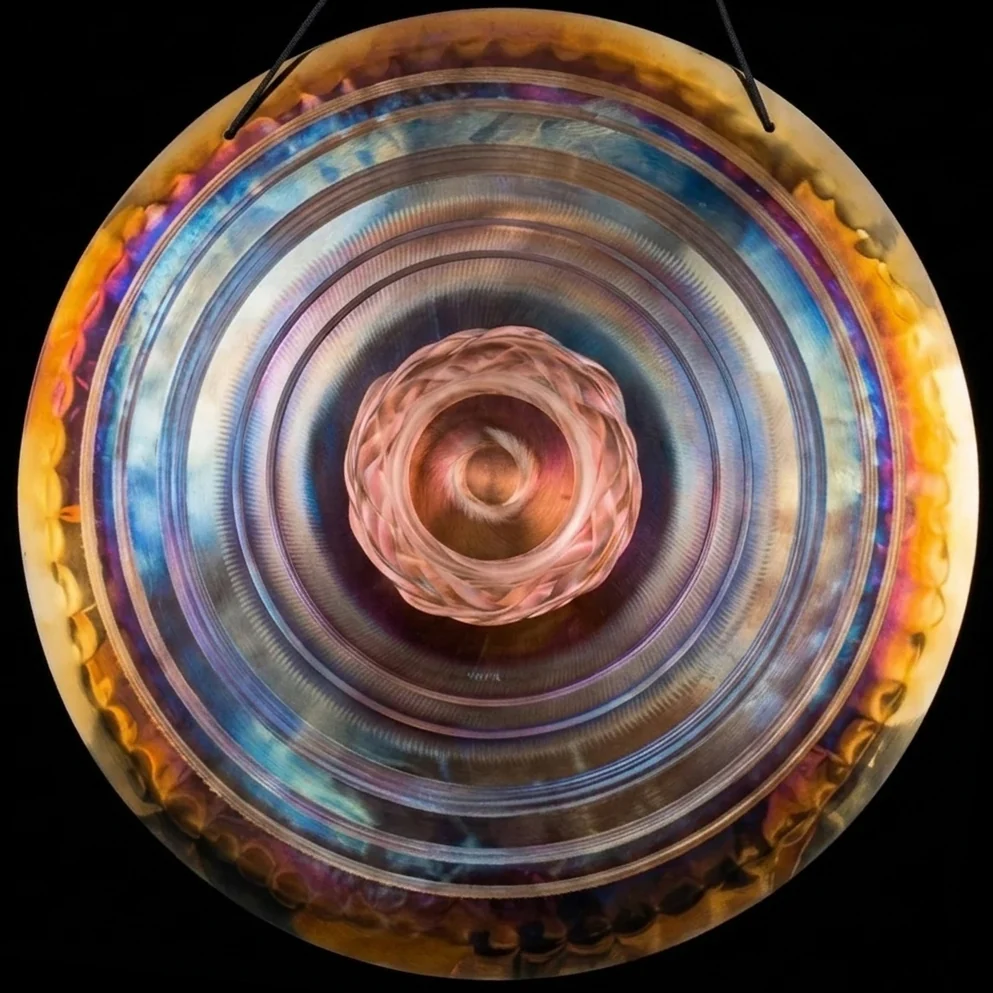
There are many grades of stainless steel, and they do not behave the same under the hammer or in sound. In our atelier we tested many of them before choosing the alloy we use today. Every gong then goes through several rounds of tuning and heat treatment; the heat helps stabilise the steel and leaves its colours on the surface: gold, violet, blue. They are part of each gong's character, and no two are alike.
Stainless steel is a demanding material to shape by hand, which is part of why stainless steel gongs are still uncommon.
Nickel silver, on request
Nickel silver is an alloy of copper, nickel and zinc. Despite its name, it contains no silver. It has a bright, pale look, and it is the material of choice for several contemporary European gong makers. Like bronze, it can tarnish over time, so it asks for a little more care than stainless steel.
We make nickel silver gongs on request. Tell us the size and note you have in mind and we will reply with what is possible, the lead time and the price.
Titanium, on request
Titanium is a light, very strong metal with excellent resistance to corrosion. Like stainless steel, it reacts to heat with colour on its surface. It is a rare material for a gong and a demanding one to work, which makes each titanium instrument a truly special piece.
We make titanium gongs on request. Write to us and we will explore the possibilities together.
Bronze, the traditional gong
For centuries, gongs have been made from bronze across East and Southeast Asia, and bronze is still the material of most gongs and tam-tams made today. Bronze is a copper alloy: with time and touch it oxidises and develops a patina, which some players love and others polish away. We don't make bronze gongs, but it is the reference every other material is compared with.
And the sound?
Here we prefer honesty to adjectives. Every gong has its own voice, shaped by its alloy, but also by its thickness, size, form and the hands that made it. The material alone does not decide whether a gong is warm or bright, long or short. The best way to judge is to listen: you can hear our stainless steel gongs in the videos of the 60 cm, 80 cm and 100 cm pages.
Which should you choose?
If you want an instrument that keeps its finish with almost no care, travels well to sessions and carries the colours of its own making, stainless steel is our recommendation, and the material of all our collection. If you are looking for something different, a nickel silver or titanium gong made for you is possible. Whatever the material, choose with your ears, and read how to choose a gong for size and note.